“You watched her do this for five years.”
“I know.”
“No, Miles. You watched. Every dinner. Every Thanksgiving. Every comment about my clothes, my school, my mother, my town. You watched me get smaller in your family’s rooms, and then you held my hand afterward like comfort could replace courage.”
He flinched.
Good.
He needed to.
“I thought I was keeping peace.”
“You were keeping your peace.”
He nodded slowly.
Tears slipped down his face.
“You’re right.”
I had expected defense.
Explanation.
His mother.
His childhood.
His fear.
Instead, he agreed.
It did not fix anything.
But it changed the shape of the conversation.
Inside, applause rose faintly for something.
Maybe the cake.
Maybe a dance.
Maybe Patricia trying to keep her world from falling in public.
“I can’t go back to how it was,” I said.
“I know.”
“I don’t know if I can trust you.”
His mouth tightened.
“I know.”
“I’m going home with my mother tonight.”
His eyes closed.
Then opened.
“Okay.”
I almost cried at the word.
Okay.
Not but.
Not please.
Not don’t embarrass me.
Just okay.
The next morning, my mother and I drove to Briar Ridge.
She refused the car service Patricia’s family belatedly tried to offer.
We drove in her old Volvo, stopping once for coffee and once because I started crying too hard to see the road.
Mom took the driver’s seat after that.
For the first hour, we barely spoke.
Then I said, “Why didn’t you tell me?”
She glanced over.
“About the trust?”
“Yes.”
“You never asked if I secretly controlled a philanthropic foundation.”
“Mom.”
She smiled faintly.
Then sobered.
“Your father and I built it quietly. After he died, people became strange around money. Some got too polite. Some got too close. Some forgot I had a name and saw only access.”
I looked out at the highway.
“I didn’t want that for you,” she said.
“What?”
“To measure people by whether they knew. Or to wonder whether kindness was aimed at you or at my signature.”
I understood that.
But it still hurt.
“You let Patricia humiliate you.”
My mother’s hands tightened on the steering wheel.
“No,” she said softly. “I let Patricia reveal herself.”
I looked at her.
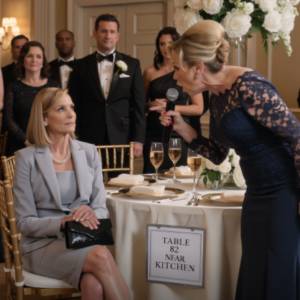
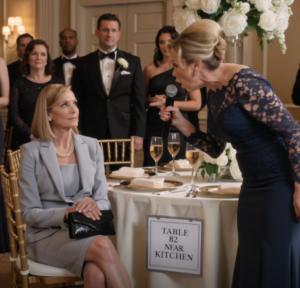
“She sat you by the kitchen.”
“And then everyone saw where she put me.”
That was my mother.
Quiet did not mean passive.
It meant patient enough to let truth gather witnesses.
“Did it hurt?” I asked.
She was silent for a while.
Then said, “Yes.”
My eyes filled.
“I’m sorry.”
“Don’t be. You didn’t seat me there.”
“I stayed married into it.”
“Avery.”
“I did. I kept thinking if I acted right, dressed right, smiled right, eventually they would stop treating me like I had slipped through the side door.”
My mother looked at me.
“Did you believe you deserved a place at the table?”
The question broke something open.
“I don’t know.”
She nodded like that was the answer she expected.
“Then come home for a while.”
So I did.
I stayed in my childhood room for three weeks.
The bed was too small.
The curtains were still yellow.
The closet held old yearbooks, prom shoes, and a box of letters Miles had written when we were first dating.
I did not read them.
Not yet.
I helped Mom at the library.
Shelved books.
Sorted donations.
Watched her talk to children by name.
Watched people in town treat her not like a hidden benefactor, but like Marian.
The woman who remembered which widow needed a ride.
Which teenager liked fantasy novels.
Which family needed books delivered because the father’s truck broke down.
For the first time in years, I remembered what respect felt like without performance.
Miles called every night.
I did not always answer.
When I did, he did not ask when I was coming home.
He told me what he had done that day.
He found a therapist.
He called Natalie.
He apologized to Andrew.
He resigned from the Whitcomb Family Arts Board, which Patricia controlled.
He told his mother she could not speak to me directly unless I invited it.
He moved out of the guesthouse behind his parents’ property and into a small apartment downtown.
That last part surprised me.
Miles had not lived under Patricia’s roof in years, but he had lived under her influence.
The guesthouse was part of that.
The family property.
The family dinners.
The family expectation that he would appear whenever summoned.
Leaving it mattered.
Patricia called me once.
I did not answer.
She left a voicemail.
“Avery, this has gone far enough. Your mother clearly enjoyed humiliating me, and now Miles is behaving irrationally. We need to speak as women.”
I played it for my mother.
She listened quietly.
Then said, “She does not want to speak as women. She wants to speak without witnesses.”
I deleted the voicemail.
The fallout in Charleston was swift.
The clip of my mother’s speech spread among social circles first, then online.
Not viral in the dancing-teenager sense.
Viral in the society scandal sense, which is worse because people pretend they are concerned while sending the link to everyone they know.
“Charleston Philanthropist Seated by Kitchen at Whitcomb Wedding Withdraws Grant.”
“Lane Trust Founder Rebukes Socialite Over Classist Remarks.”
“Wedding Speech Sparks Charity Leadership Shakeup.”
Patricia hated the word classist.
She hated socialite more.
The Whitcomb Children’s Arts Initiative lost the Lane grant.
Then two smaller donors paused their commitments.
Then the Arts Council requested Patricia step down temporarily while they reviewed leadership.
Temporary became permanent by Thanksgiving.
Patricia blamed my mother.
Then me.
Then “online mobs.”
Then Graham Ellis.
Then the seating coordinator.
Never herself.
Natalie called me one afternoon in tears.
“I didn’t know,” she said.
I sat on my mother’s porch, watching rain drip from the roof.
“About the table?”
“I knew Mom put your mother far away. I didn’t know it was by the kitchen.”
I closed my eyes.
“Natalie.”
“I should have checked. I was so tired, Avery. I just let Mom handle everything.”
I believed her.
That was the hard part.
Natalie was not cruel like Patricia.
She was trained.
Managed.
Tired.
Used to letting her mother turn every family event into a stage.
“I’m not angry at you,” I said.
“I am.”
“At me?”
“At myself.”
Good.
That was a beginning.
She sniffled.
“Andrew said our wedding finally became honest during the worst part.”
“I like Andrew.”
“Me too. Thank God I married someone with a spine.”
We both went quiet.
Then she whispered, “I’m sorry. I didn’t mean—”
“It’s okay,” I said.
But it was not.
Not entirely.
Miles knew it too.
Three months after the wedding, he drove to Briar Ridge.
He did not tell me until he was already in town because he said he wanted to speak to my mother even if I refused to see him.
That annoyed me.
It also impressed me.
He showed up at the library in jeans, a sweater, and the expression of a man walking into judgment he had earned.
My mother was leading story hour.
Miles waited by the biography shelf for forty minutes while toddlers shouted animal sounds at her.
When she finished, she walked over.
“Miles.”
“Marian.”
They stood there between shelves of books and the low hum of the circulation desk.
“I came to apologize,” he said.
“So you said in your message.”
“I know you don’t owe me your time.”
“No, I don’t.”
He nodded.
“I’m sorry I let my mother mistreat you.”
My mother folded her hands.
“That is broad.”
He swallowed.
“Yes, ma’am.”
Then he tried again.
“I’m sorry I stayed silent when she mocked where you live. I’m sorry I let her use your kindness as proof you were less important. I’m sorry I watched her seat you near the kitchen and did not move your chair myself.”
My mother’s face did not change.
Miles continued.
“I’m sorry because my silence taught Avery she could not trust me to protect the people she loves. And I’m sorry because I think I liked being the good son more than I liked being a good husband.”
That one reached her.
I saw it from the nonfiction aisle where I was absolutely not spying, just reorganizing books no one had asked me to reorganize.
My mother said, “Does Patricia know you’re here?”
“No.”
“Good.”
His mouth twitched.
Just slightly.
Then she said, “An apology is a door, Miles. Not a room. If Avery opens it, you still have to walk correctly.”
“I know.”
“No. You are learning.”
He lowered his eyes.
“Yes, ma’am.”
I hated how much I loved that.
He found me in the library garden afterward.
I was sitting on a bench near the herb planters, pretending I had not heard every word.
He sat at the other end.
Not too close.
“Your mother is terrifying,” he said.
“She grows tomatoes.”
“Like a benevolent warlord.”
I almost smiled.
Then we sat in silence.
He looked thinner.
More tired.
Less polished.
Better, maybe.
“I’m not asking you to come home,” he said.
“Good.”
“I’m asking if I can keep doing the work where you can see it.”
I looked at him.
“What does that mean?”
“It means therapy. Boundaries. No family events unless you want them. No Patricia without accountability. No asking you to be patient with disrespect. No telling you what my mother meant when we both know what she did.”
My throat tightened.
“And when it gets hard?”
“It will.”
“Yes.”
“I’ll probably fail sometimes.”
“Yes.”
“But I won’t ask you to pretend failure is peace.”
That sounded like something his therapist had said.
I did not mind.
Therapists exist so people can borrow better sentences until they grow their own.
“I’m still angry,” I said.
“I know.”
“I don’t know if anger means it’s over.”
He nodded.
“I don’t either.”
I looked toward the library windows.
Inside, my mother was helping a boy choose books about sharks.
“Do you know what hurt most?” I asked.
Miles was silent.
“That I started feeling embarrassed by my own mother around your family. Not because of anything she did. Because Patricia kept treating her like something I had failed to hide.”
His face crumpled.
“I know.”
“No, Miles. You don’t.”
His eyes filled.
“You’re right. I don’t.”
That was a better answer than comfort.
“I will spend the rest of my life being ashamed of that,” he said.
“Don’t spend it being ashamed. Shame gets lazy. Do something else.”
He looked at me.
“What?”
“Become the kind of man who would have moved the chair.”
He nodded slowly.
“I can try.”
I looked at him for a long time.
“Try where I can see it.”
So he did.
The first real test came at Christmas.
Patricia sent an engraved invitation to “a family reconciliation dinner” at the Whitcomb house.
It was printed on thick cream paper.
Cream paper is where rich families put emotional manipulation when texting feels too honest.
Miles called me as soon as it arrived at his apartment.
“Did you get one?”
“Yes.”
“Are you going?”
“No.”
“Good.”
I blinked.
That was not the conversation I expected.
“You’re not?”
“No.”
“What did you tell her?”
“That reconciliation requires accountability, not dinnerware.”
I sat down on my mother’s porch steps.
“Who are you?”
He laughed softly.
“Still late. But trying.”
Patricia did not respond well.
CONTINUE READING